
Many people have given me show-and-tells about their prized moonstone pieces. Usually what happens is that I admire the pieces and their stories. But I tell them that it’s not moonstone that they have. Most often it’s labradorite or chalcedony. Absolutely nothing wrong with that, apart from sales people misinforming their customers.
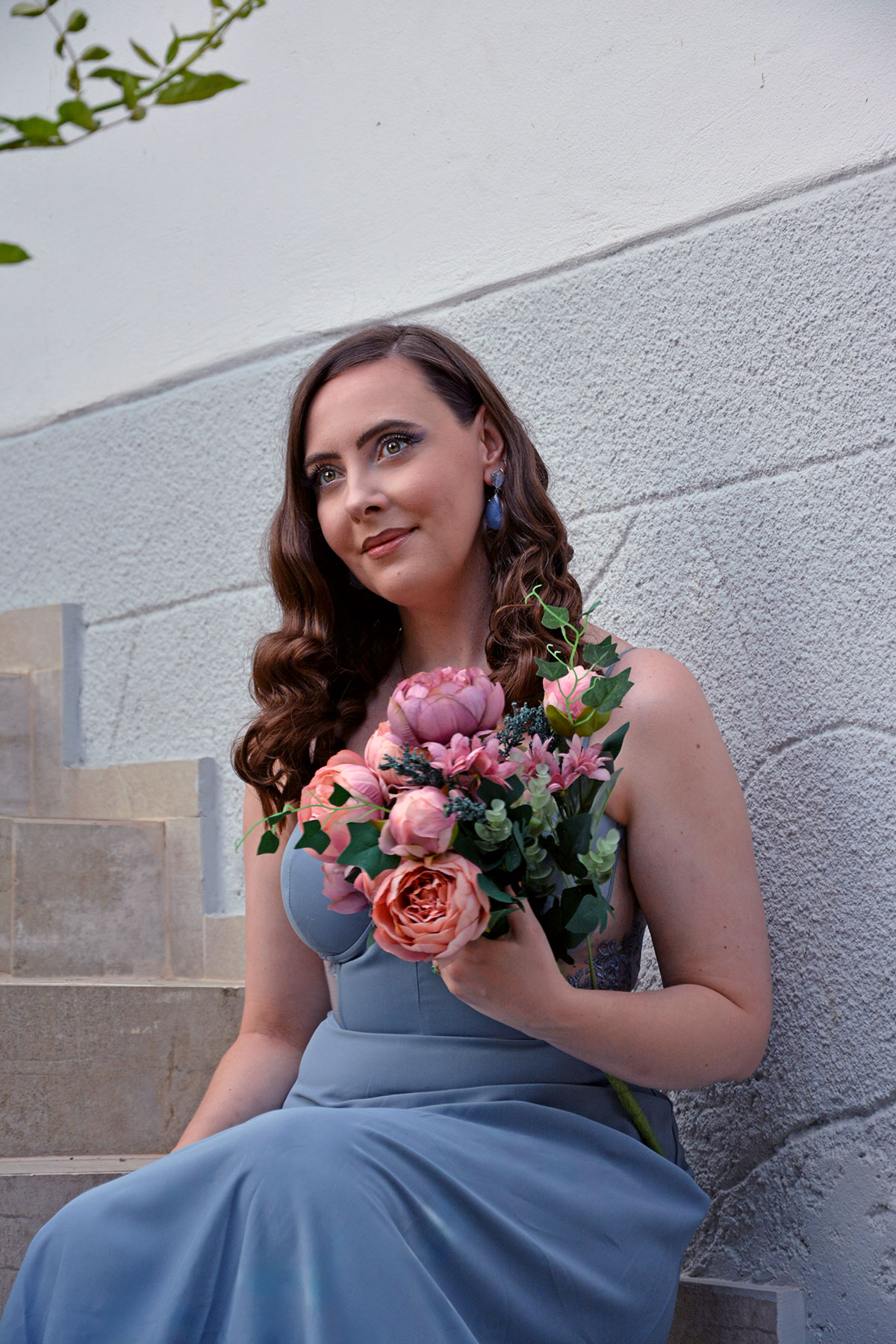
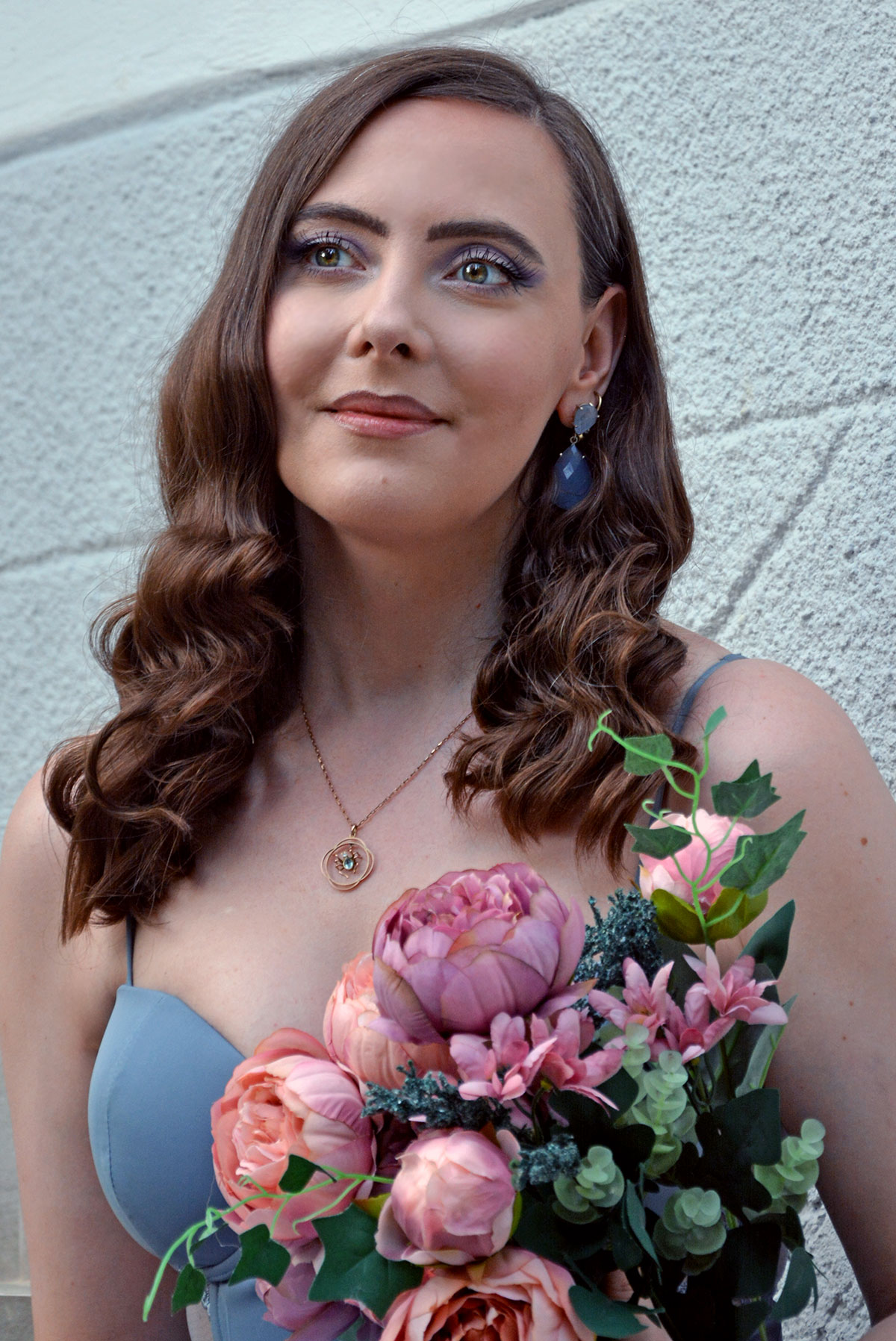
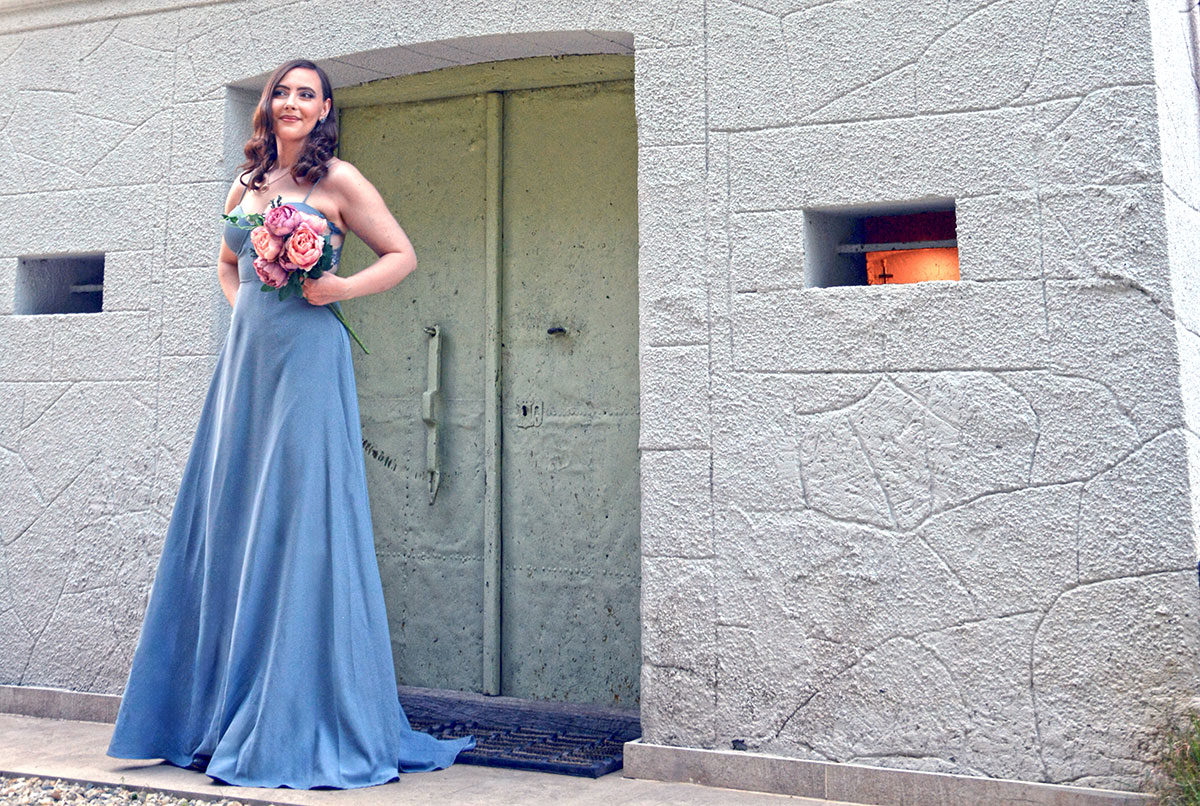
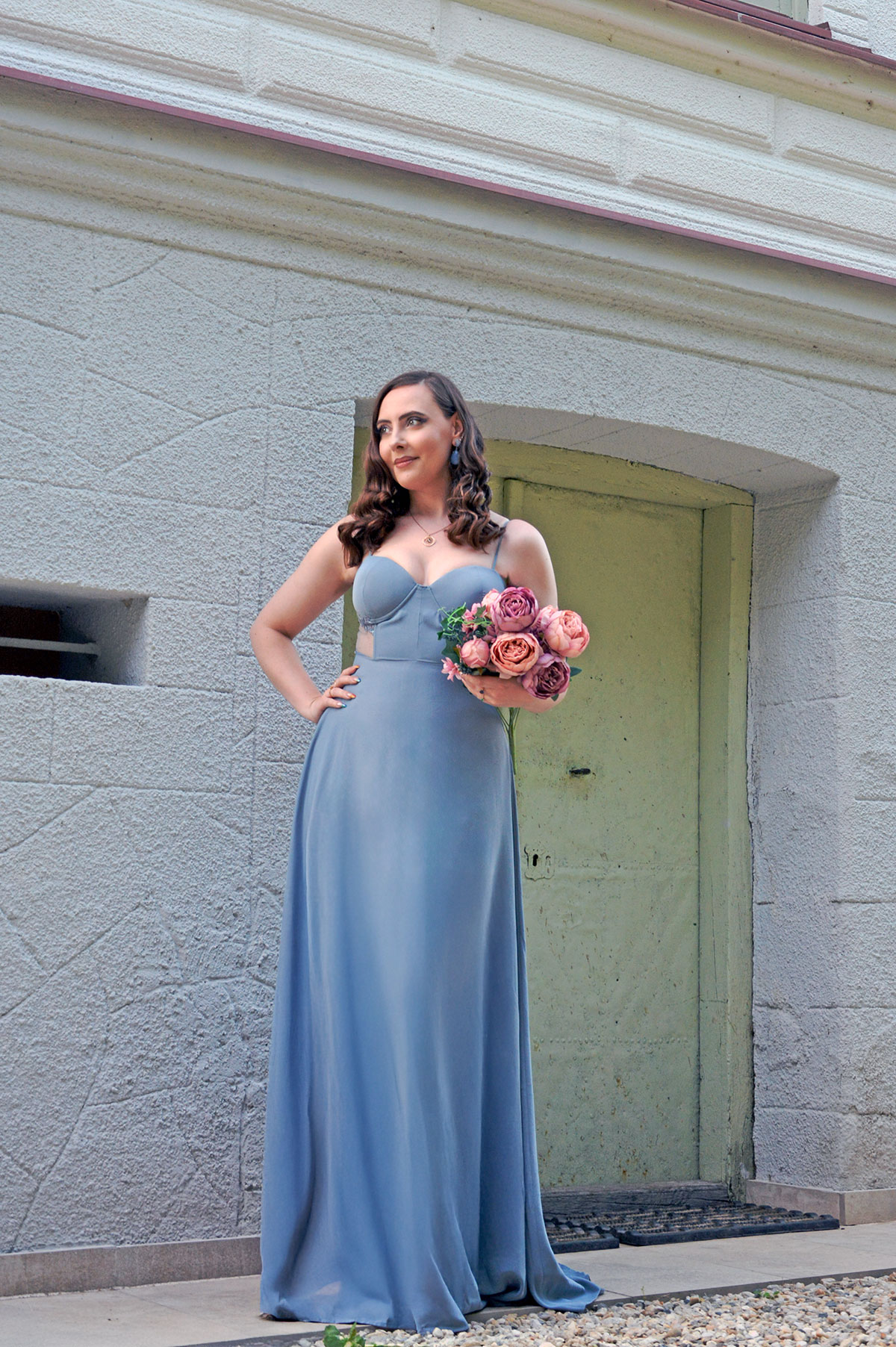
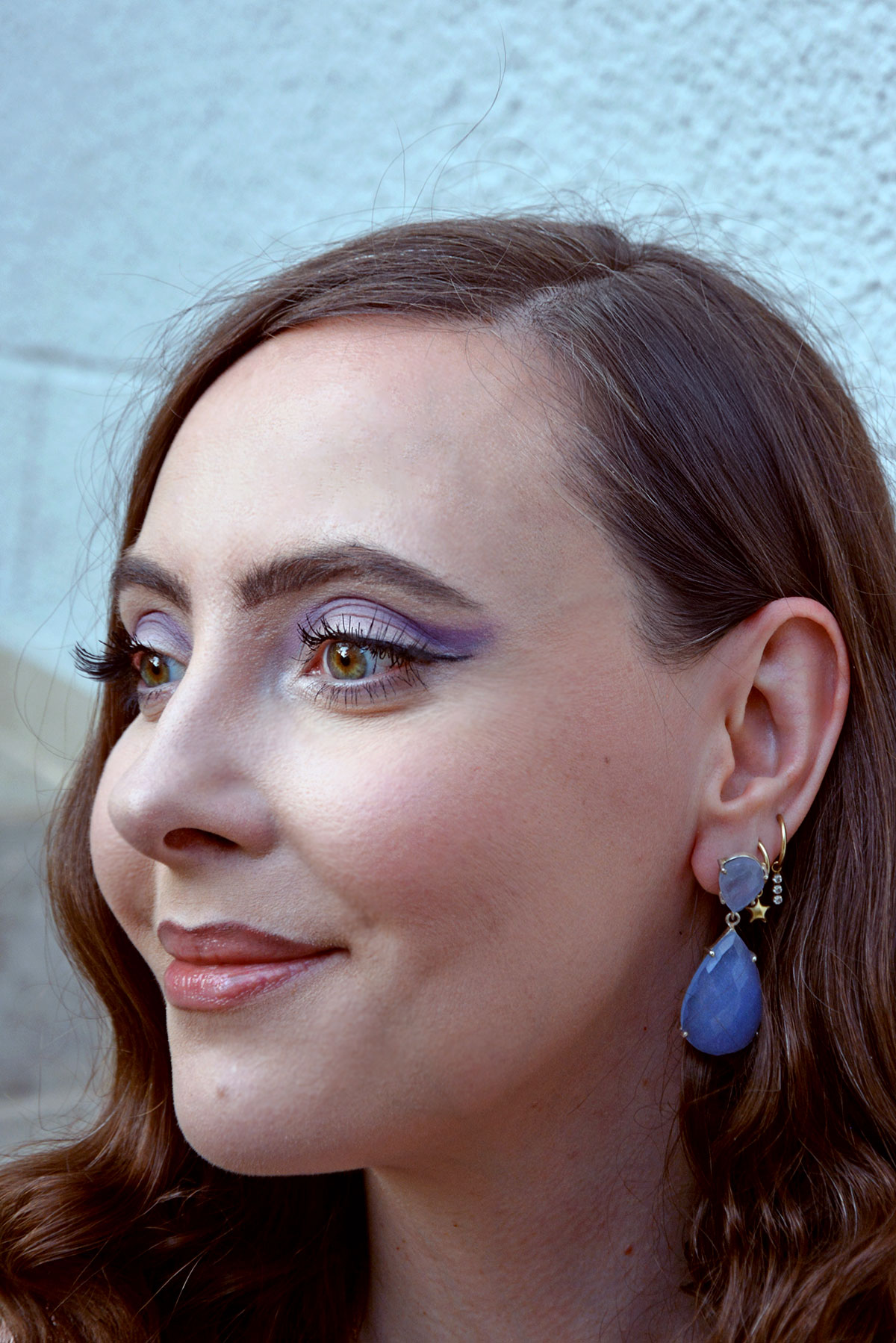
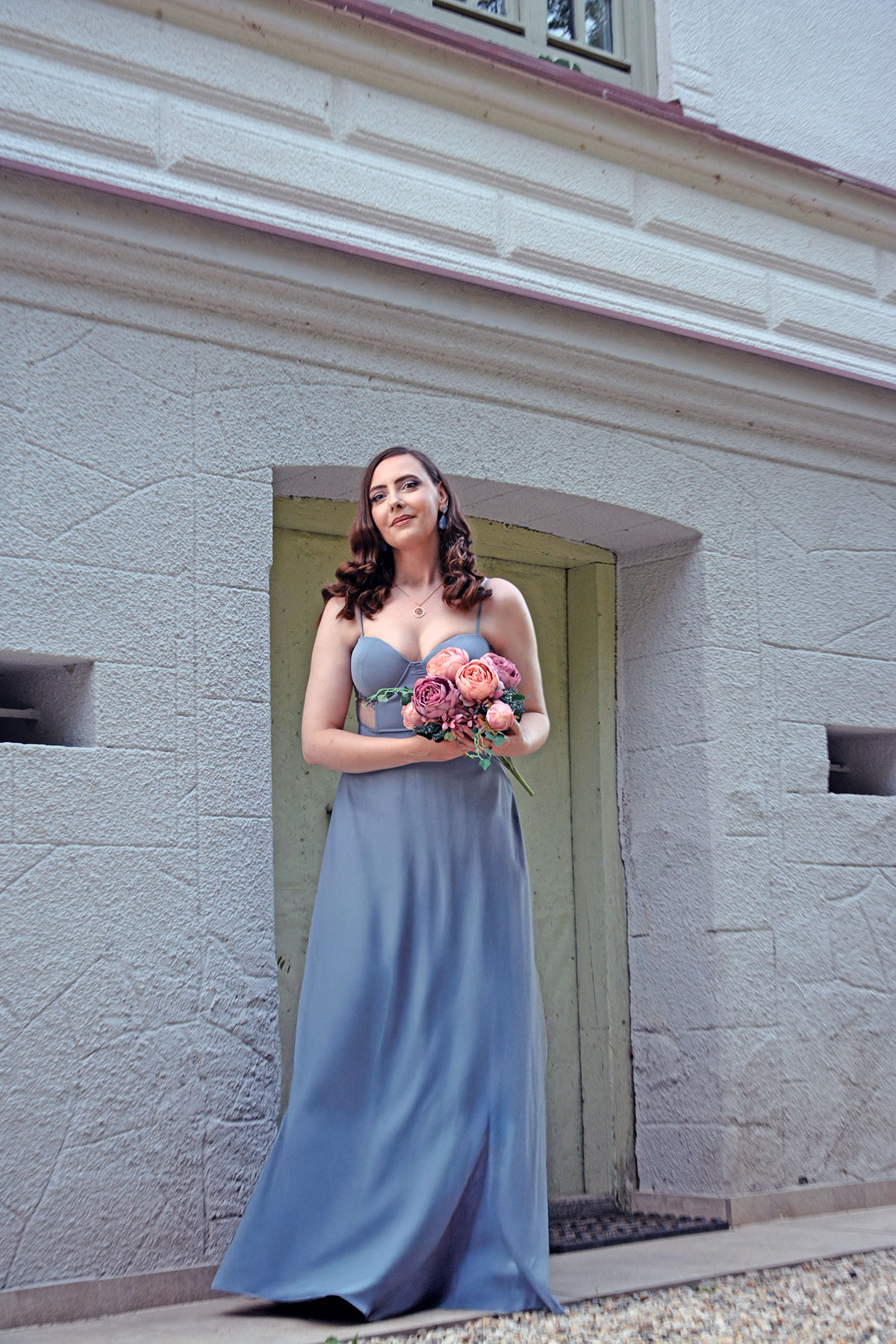
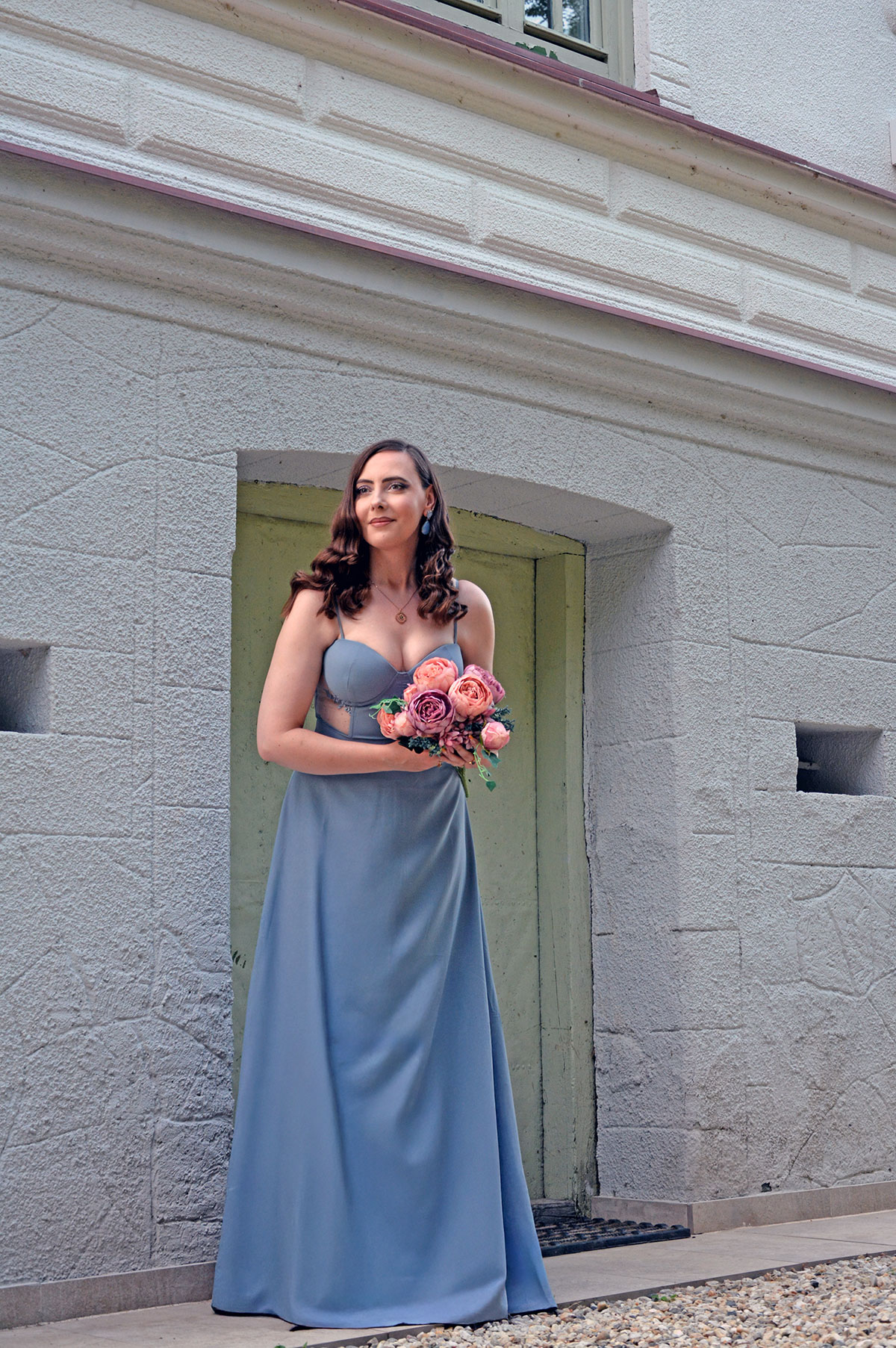
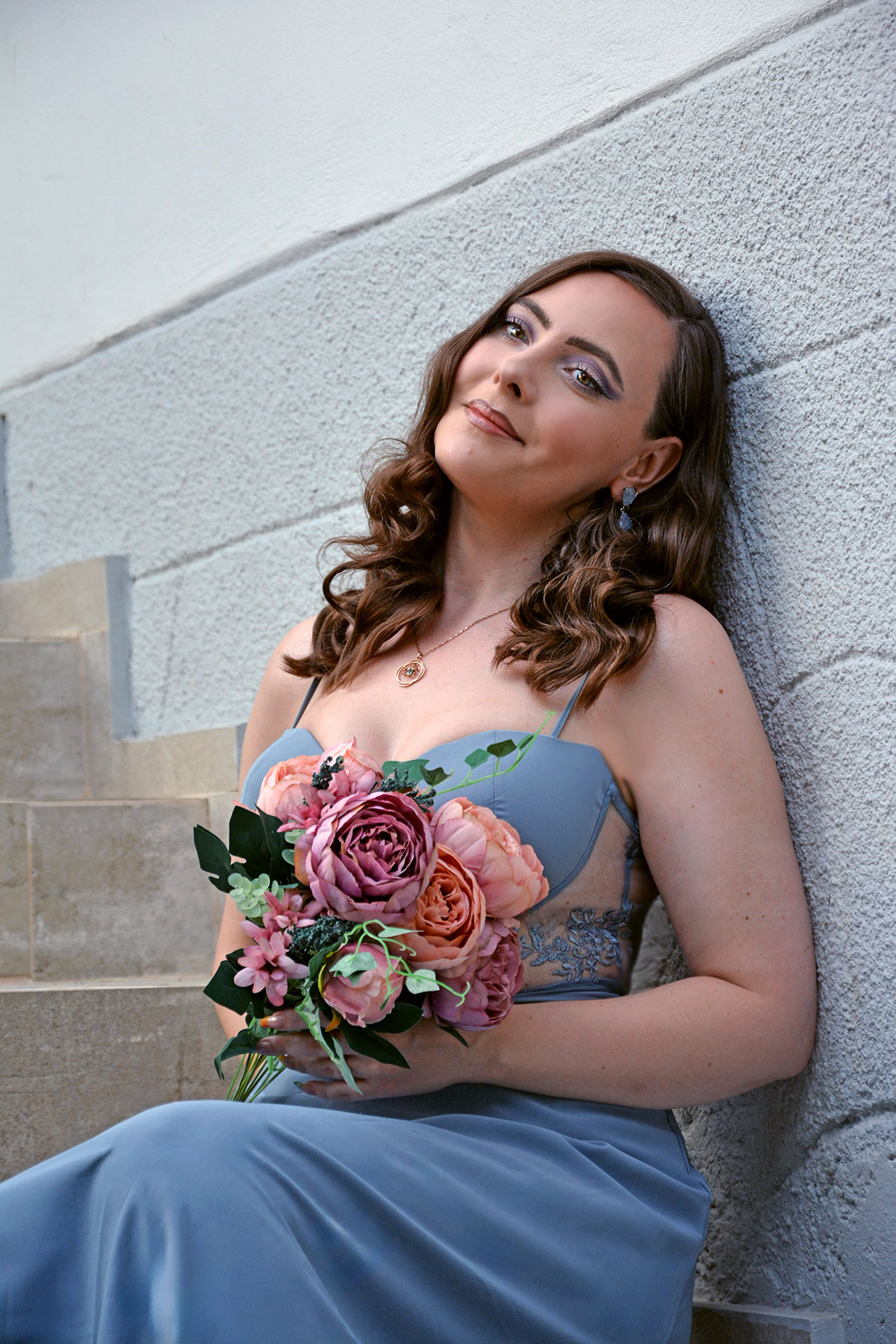
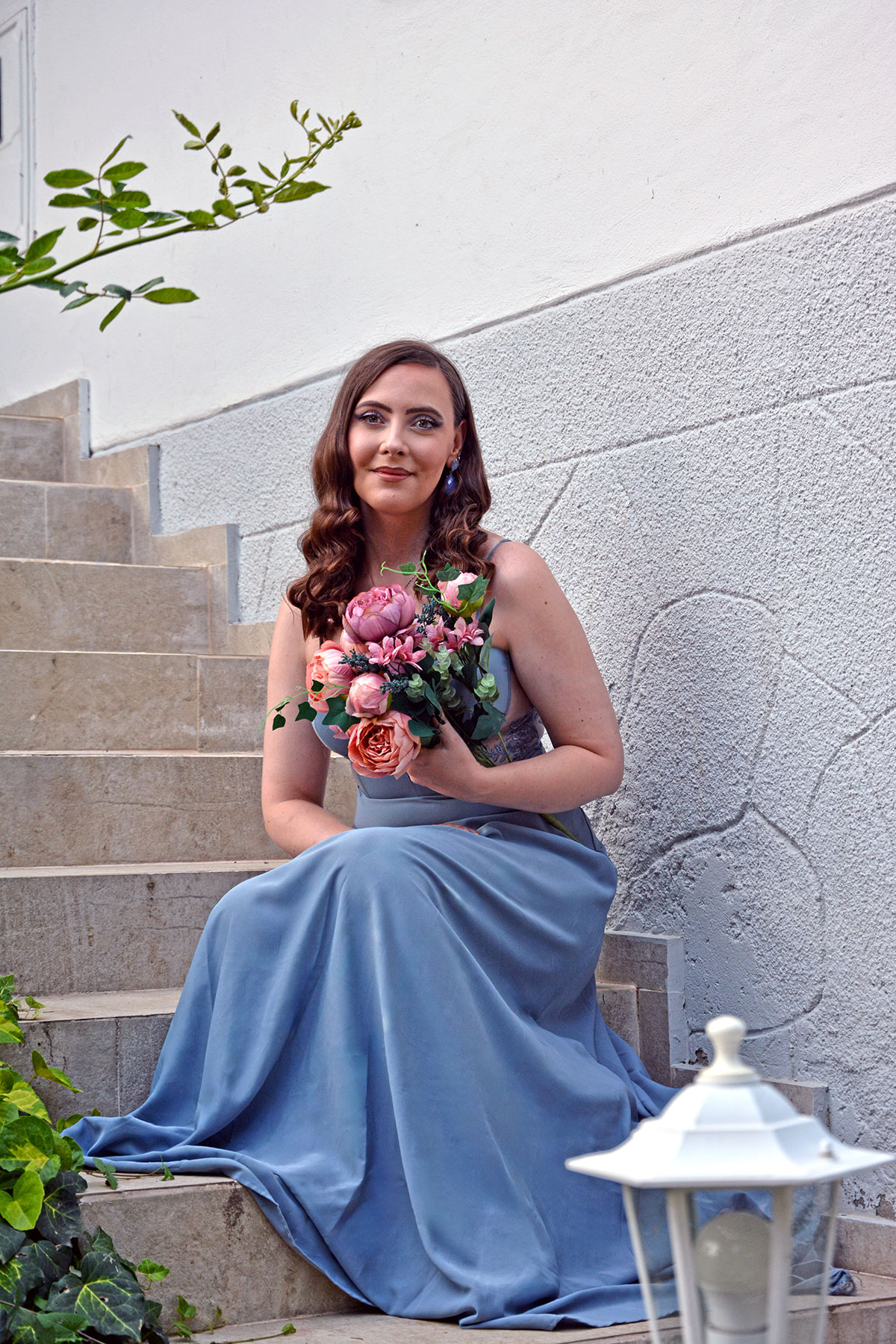
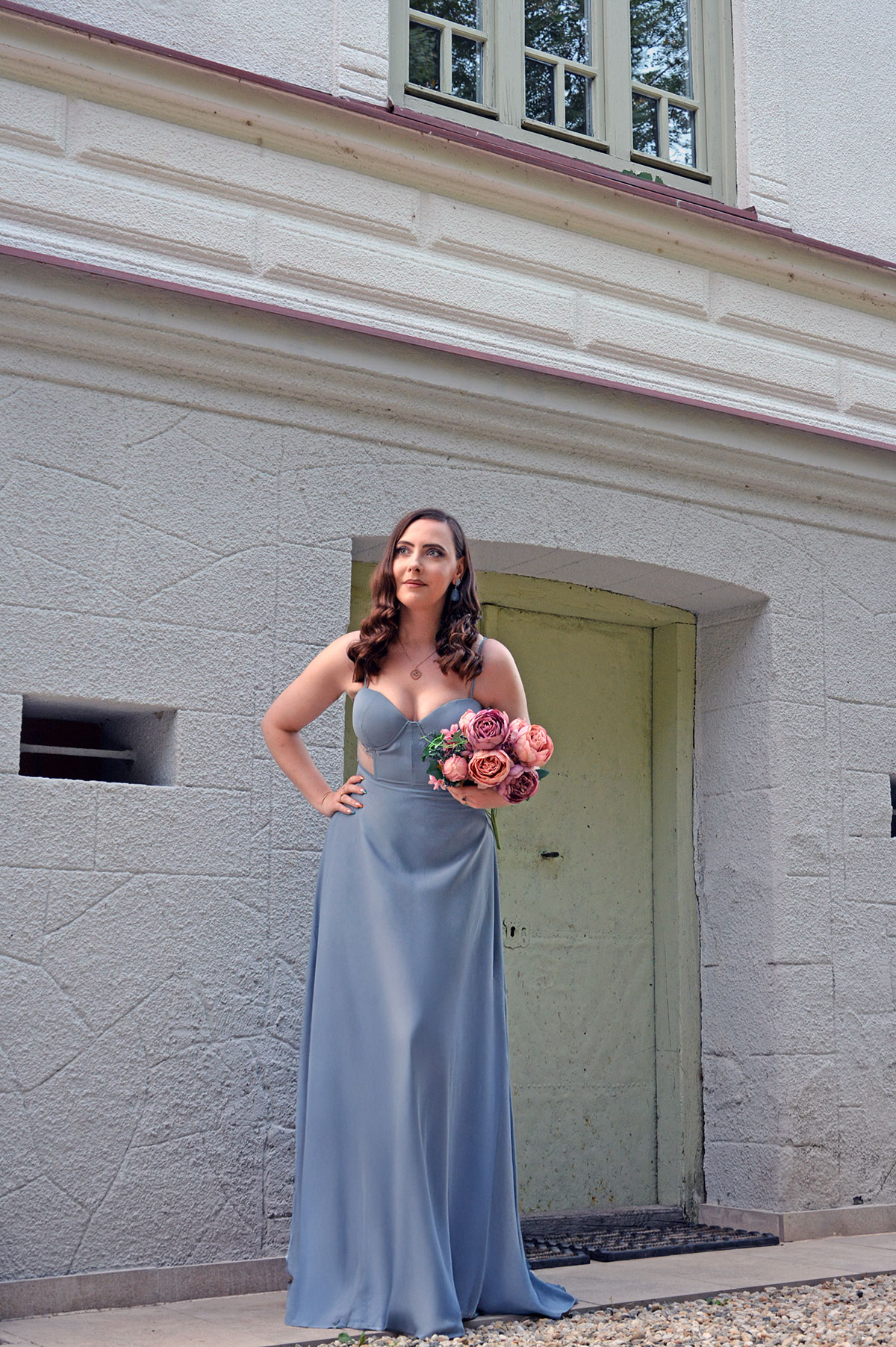
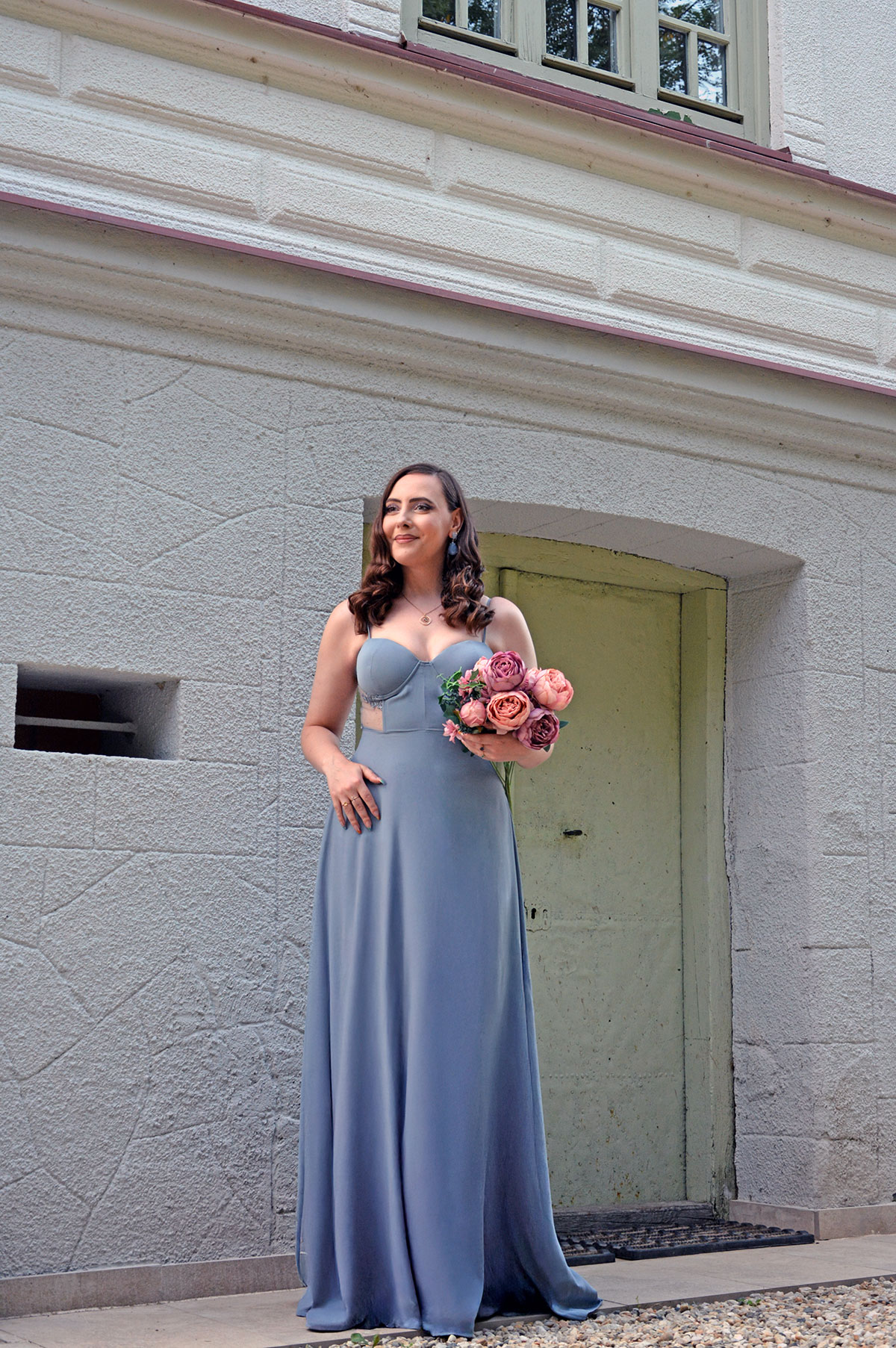
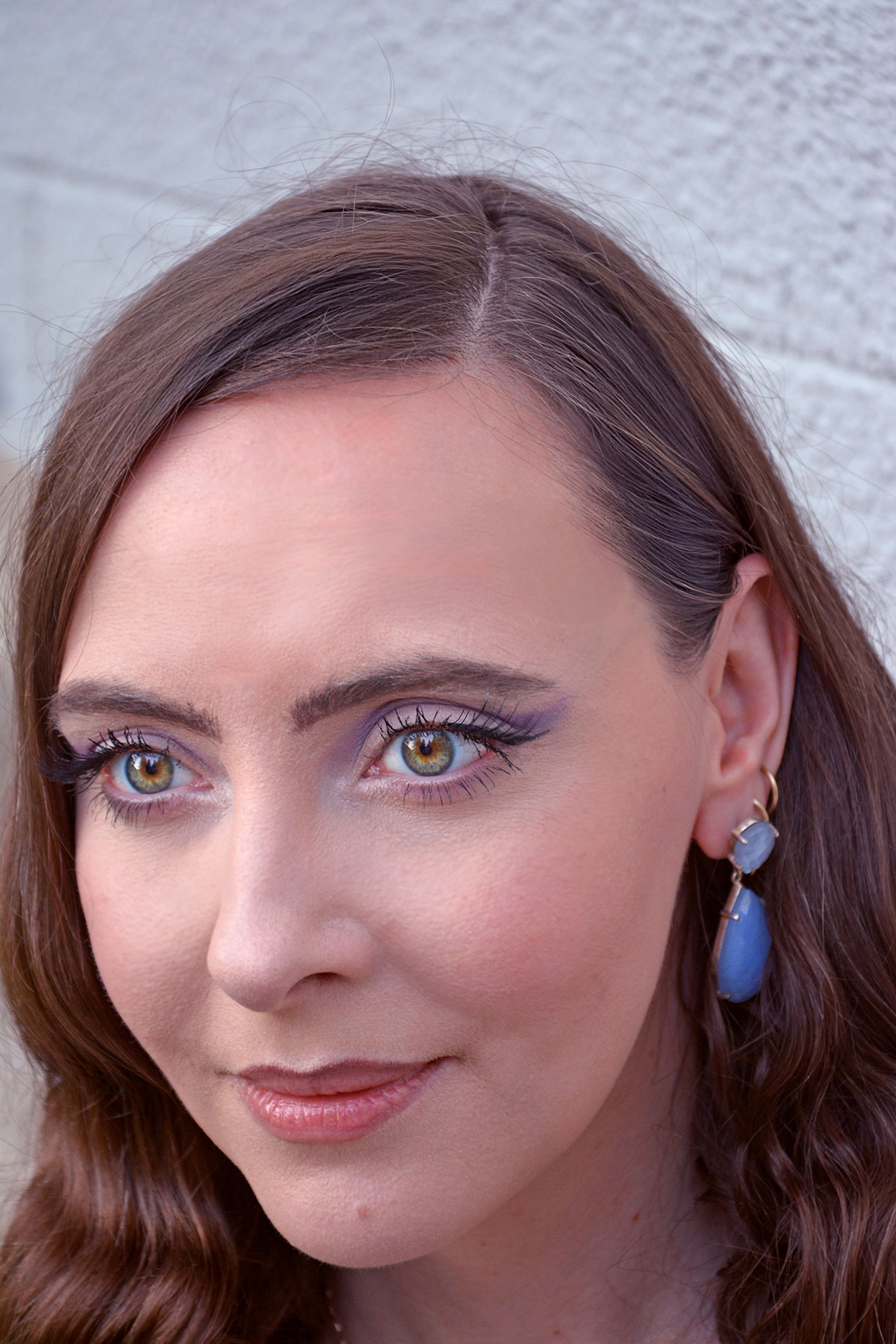
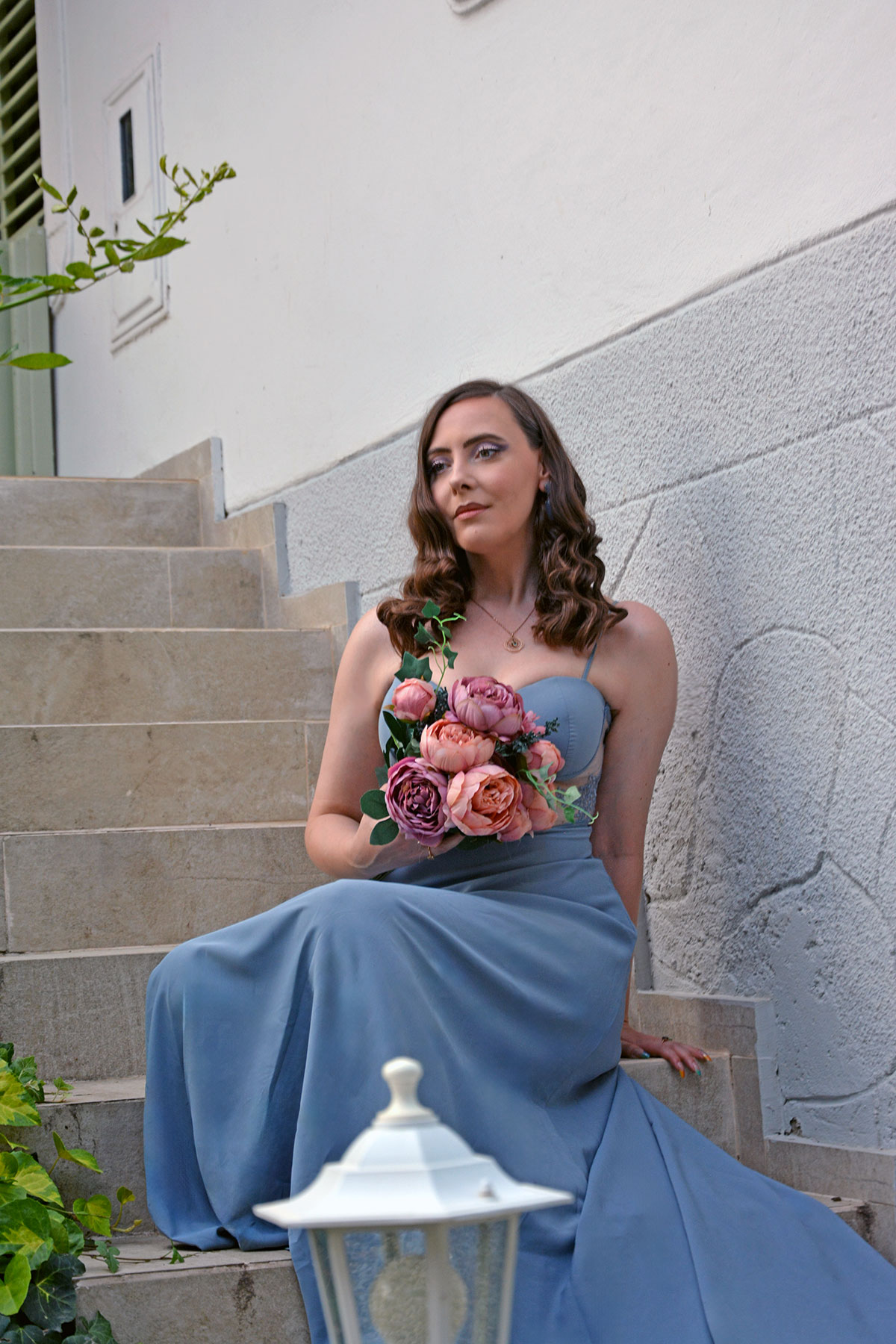
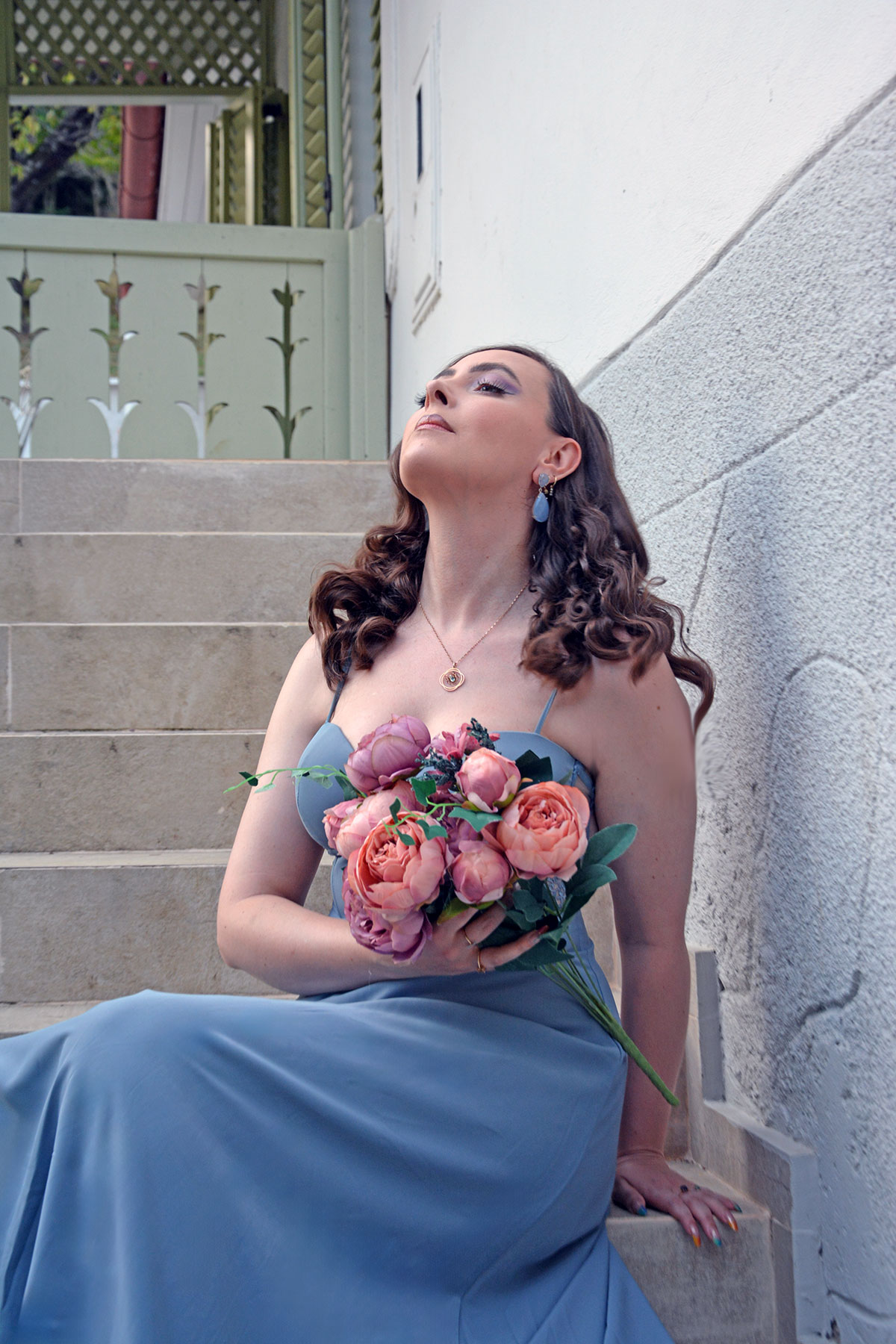
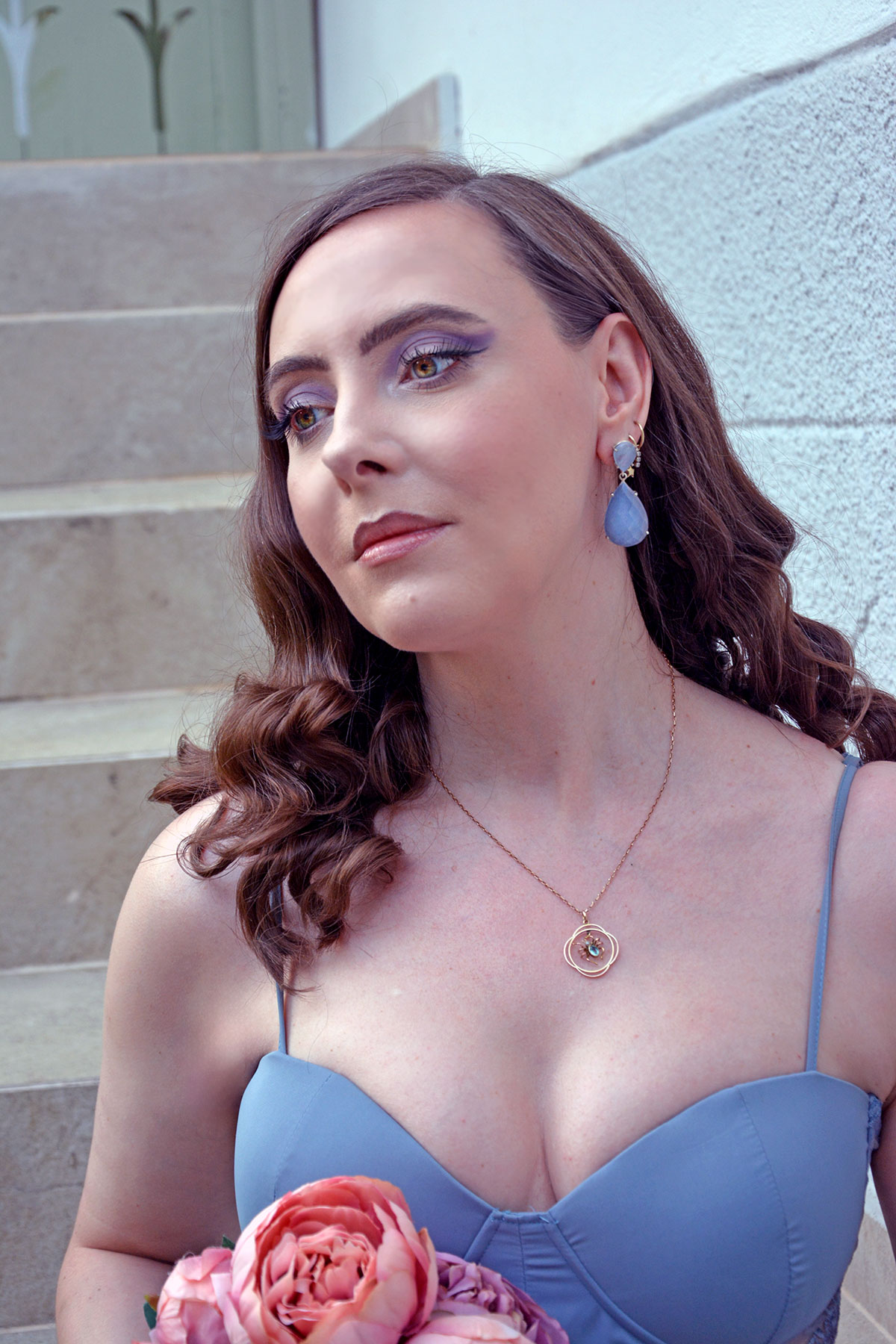
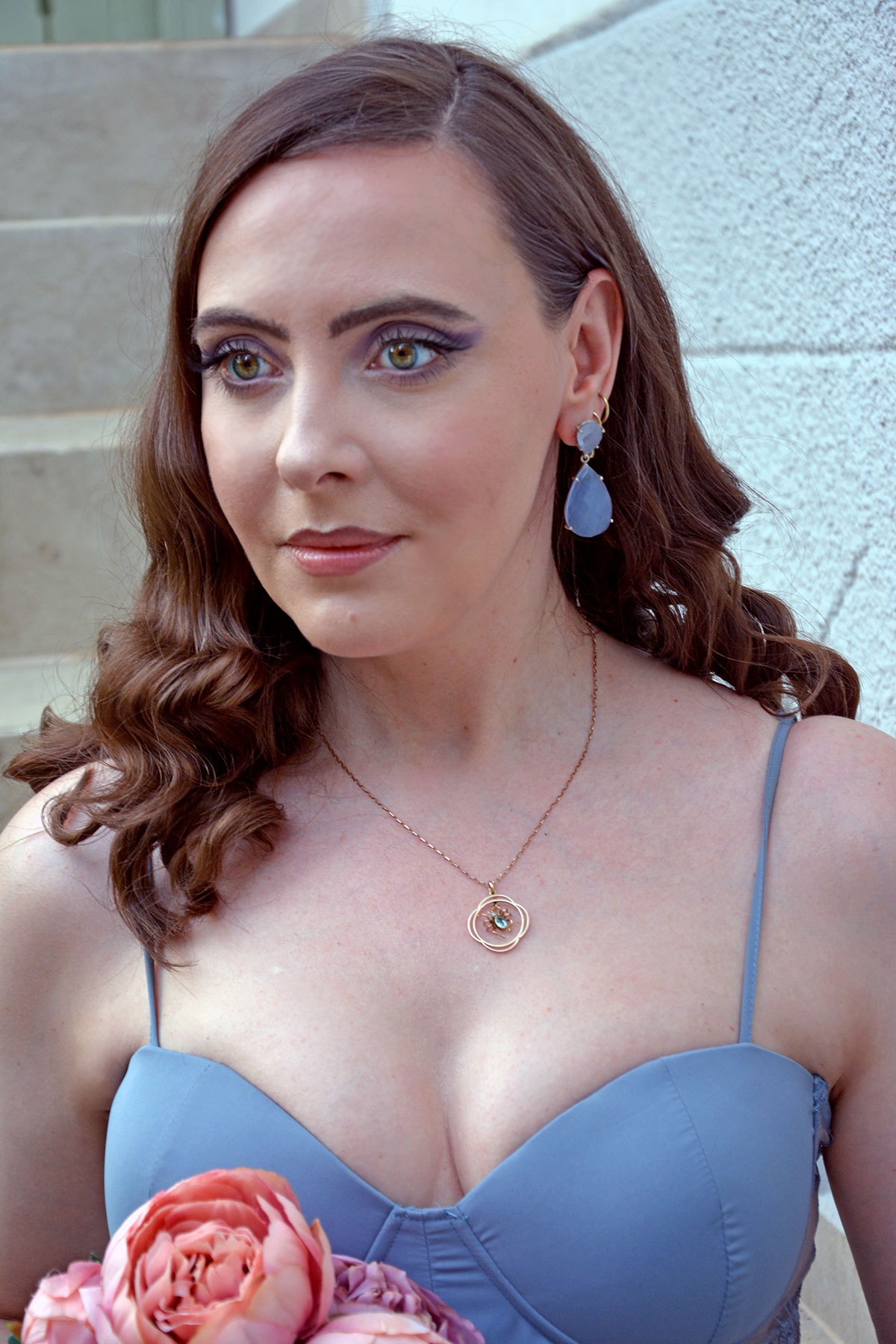
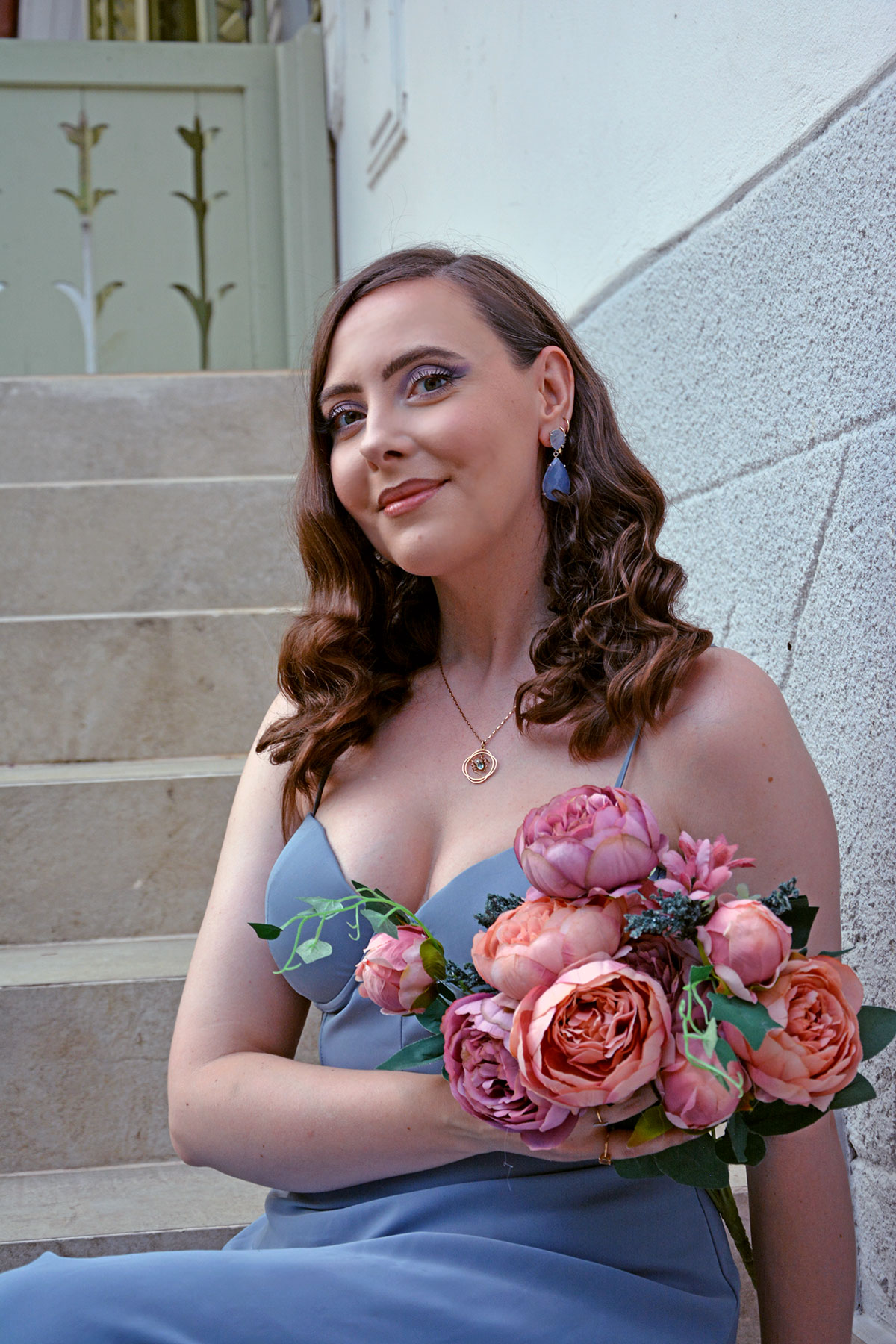
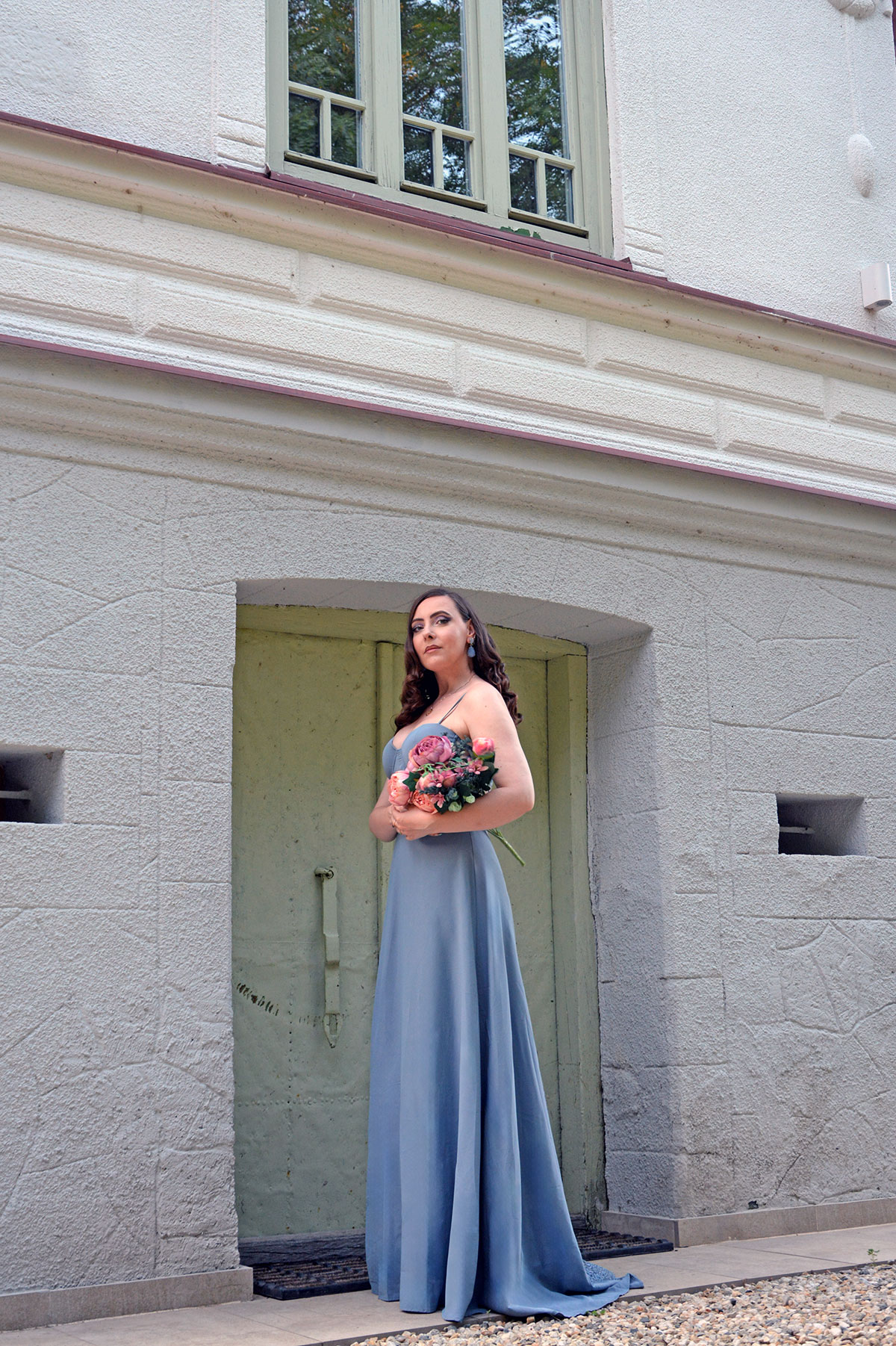
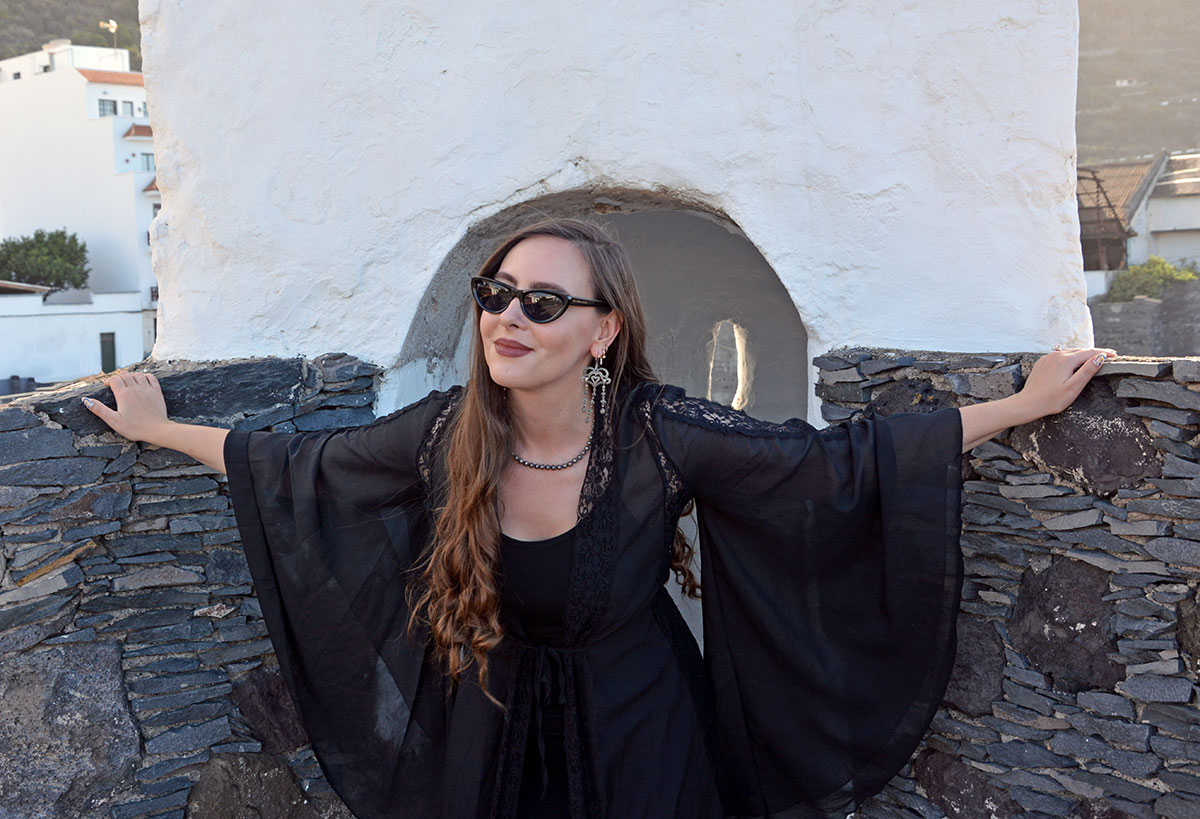
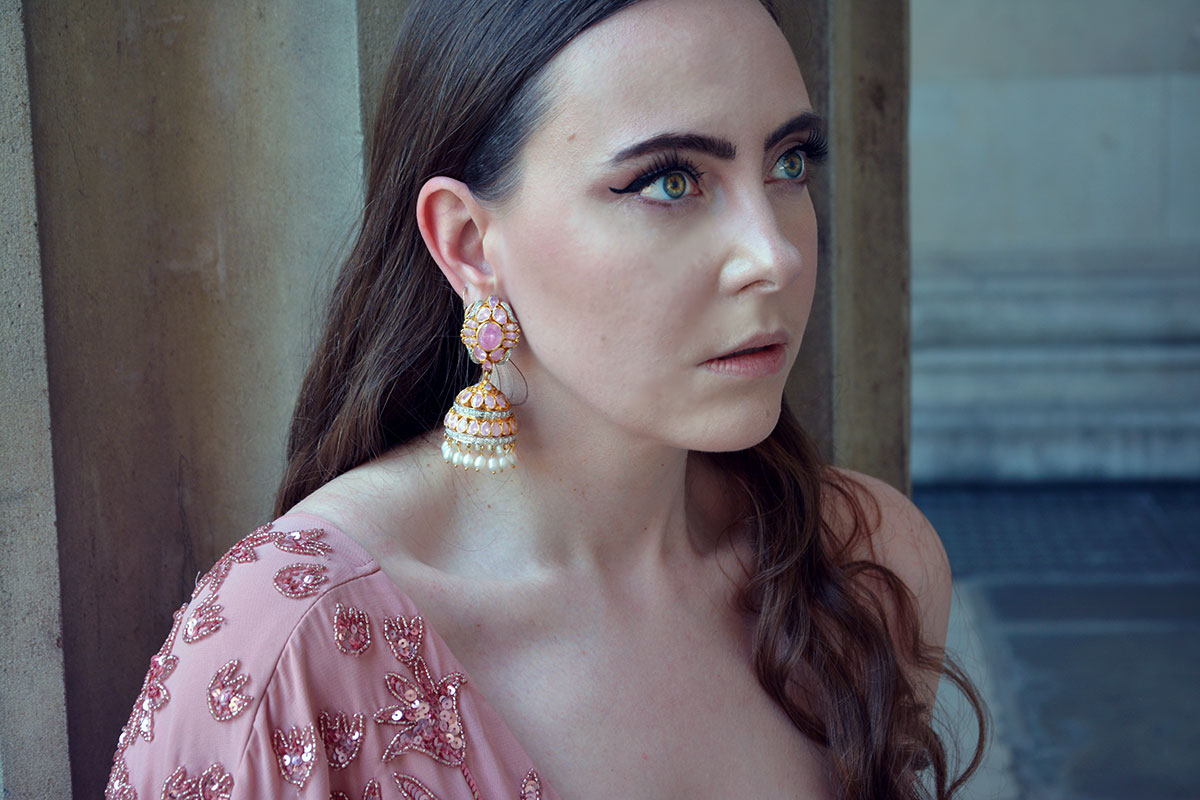
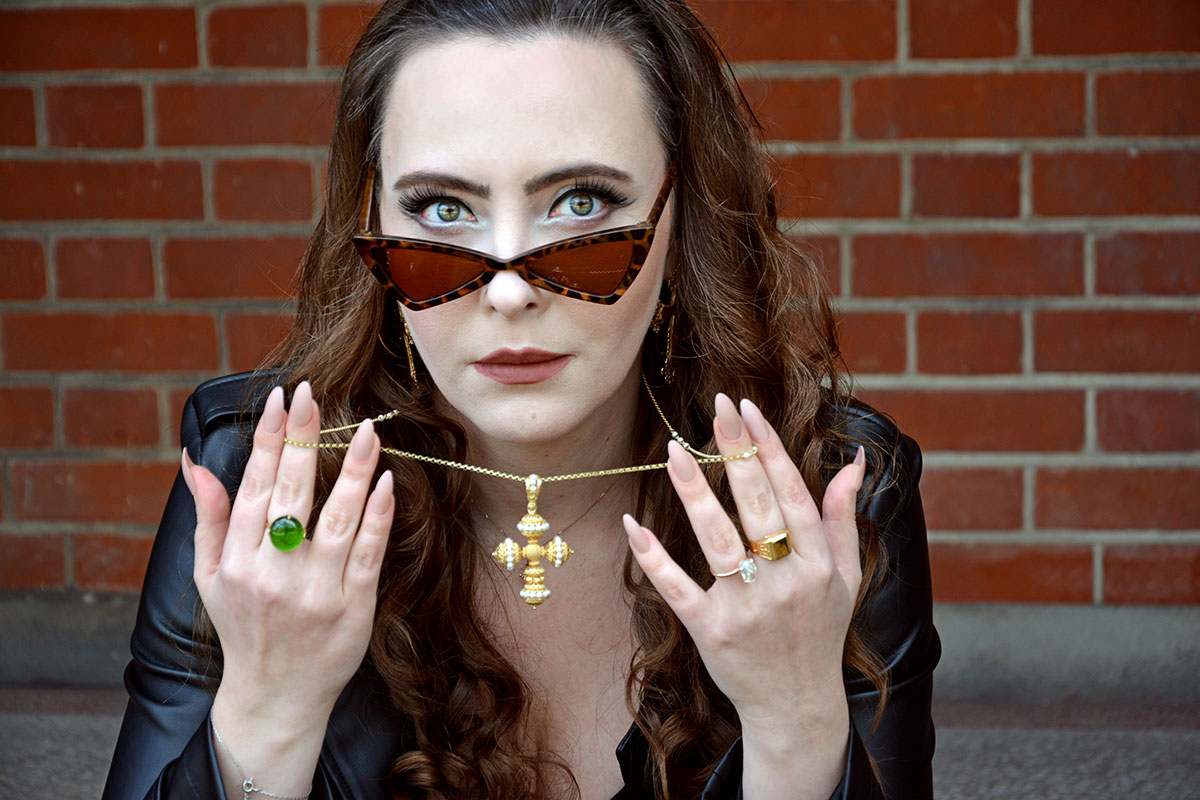
If you look at the earrings that eerily match my dress in the images, it is easy to assume that they’re moonstone due to their adularescence. But they are the most classic tone of blue chalcedony.
If you’ve never heard of chalcedony, don’t worry. You have. If agate, jasper, onyx, bloodstone or carnelian ring any bells – they’re all types of chalcedony. So let’s talk about this semi-precious gemstone and all of its hues.
What is chalcedony?
Let’s start with the basics. How do you actually pronounce chalcedony? While you’ve probably heard a whole plethora of variants, it is actually pronounced kal-SEH-duh-nee.
Chalcedony is a cryptocrystalline form of silica, made out of intergrowths or quartz and moganite. This creates a dense mass that looks semi-translucent with a waxy luster, which is quite different to what we traditionally think of when it comes to quartz. That is because of the moganite intergrowths (by the way, I did not misspell morganite, that’s something different). Moganite actually has the same chemical composition as quartz, but its crystal structure differs. The two together create chalcedony and its entire colour family, making it a quartz variety, but also not quite.
The hues include waxy whites, grays, greens and blues, and I’ll stop here because chalcedony can come in any colour if heat treated or dyed, which it often is. The blue variety is especially desirable as it has that same enchanting glow called adularescence as a moonstone. On Mohs scale of hardness, chalcedony floats between 6-7.
What are the names chalcedony types?
It can get confusing to think of chalcedony and all of its varieties. But let me try to make it easier. If chalcedony is Reddit, the varieties are Subreddits. If we think of other gemstones that have a similar family tree, think of garnet as the general term, and pyrope and tsavorite as types of garnets known for their specific hues. Beryl can sing a similar song, where emerald is green beryl, and morganite is pink beryl.
With this out of the way, what are the types of chalcedony?
- Agate: This is a banded variety of chalcedony, meaning it features bands of colour. There are many types of agate, here’s a few honourable mentions:
- Moss agate: Features moss-like inclusions.
- Iris agate: Shows iridescence which means it glows in a rainbow of pastel colours.
- Blue lace agate: A blue shade of agate that looks like its embraced by gentle white lace banding.
- Fire agate: Lights up with iridescent flashes similar to opal.
- Landscape agate: A gem where inclusions make the stone look like a landscape painting rivaling Turner or Constable.
- Onyx: A black and white agate, where the dark bands are often separated and enhanced to have that black hue, although you can find it banded too.
- Sardonyx: Exactly like onyx above, the bands here are orange, red or brown with white.
- Aventurine: Comes in blueish green to blue – it is the gem that can have that glow we’ve mentioned, called aventurescence.
- Bloodstone: A very dark green stone that is speckled with red spots, also known as heliotrope.
- Carnelian: A rich orange to deep red, you can find out more about carnelian here.
- Chrysocolla: Also known as gem silica; it is a stunning chalcedony variety that is green-blue, and is often used as a turquoise alternative. It’s unfair that some see it as “fake turquoise”, it is beautiful in its own right.
- Chrysoprase: An apple green chalcedony – arguably the greenest green of all gemstones.
- Jasper: An opaque variety, speckled with impurities which give it unique patterns and colours.
Is chalcedony expensive?
I’ve mentioned above that chrysocolla may be seen by some as “fake turquoise”. So does fake means cheap? And what about the rest of the chalcedony world? Let’s look into some general pricing.
General Pricing:
- Typical chalcedony (blue, white, gray): $0.50 to $5 per carat.
- Desired high adularescence blue chalcedony: Up to $15 per carat.
- Chrysoprase: as it is rare, good specimens can fetch $40 per carat.
- Chrysocolla: $100+ per carat. Shocked? This is one of the most expensive types of chalcedony. Of course, it is more affordable than some turquoise specimens that can retail for $200+ per carat. You can find out about turquoise pricing in-depth here.
- Unique large agate specimens (like landscape agate): $200+ as these tend to be one-offs
In summary, not all chalcedony is equally priced, some of it is seen as more valuable, with unique stones fetching estimations above the value of gold.
You keep track of live prices of chalcedony specimens at Gem Rock Auctions.
Can chalcedony be forever, or is that only diamonds?
We’ve covered that chalcedony overall is not a brittle stone, but it’s not the hardest either, fetching 6-7 on Mohs hardness scale. So how to make sure it lasts forever (because it can!)?
- Do not use ultrasonic cleaner: Use mild soap, warm water (not hot), and a soft brush.
- Avoid harsh chemicals: Both acidic and alkaline solutions can damage the surface of the stones.
- Take it off when swimming: Be it laps in the pool, or dips into the sea, it’s best to take all your jewellery off. Unless you want a chance to make metal detectorists happy?
- Limit sunlight exposure: Dyed or heat-treated stones like onyx can fade in prolonged sunlight, so it’s best to keep your gems away from the sun.
- Make space in your jewellery box: Store your chalcedony away from sharp claws that hold your diamonds in place. Prevent scratches from harder materials and metals by keeping your pieces in pouches or jewellery trays.
Is chalcedony a good gift?
Yes! Due to the variety of colour and the amplitude in price from low to extremely high, chalcedony can be the perfect gem for any budget or taste. Plus, in case you needed an occasion, chalcedony varieties symbolise the following anniversaries:
- 7th Anniversary – Onyx
- 17th Anniversary – Carnelian
- 18th Anniversary – Chrysoprase
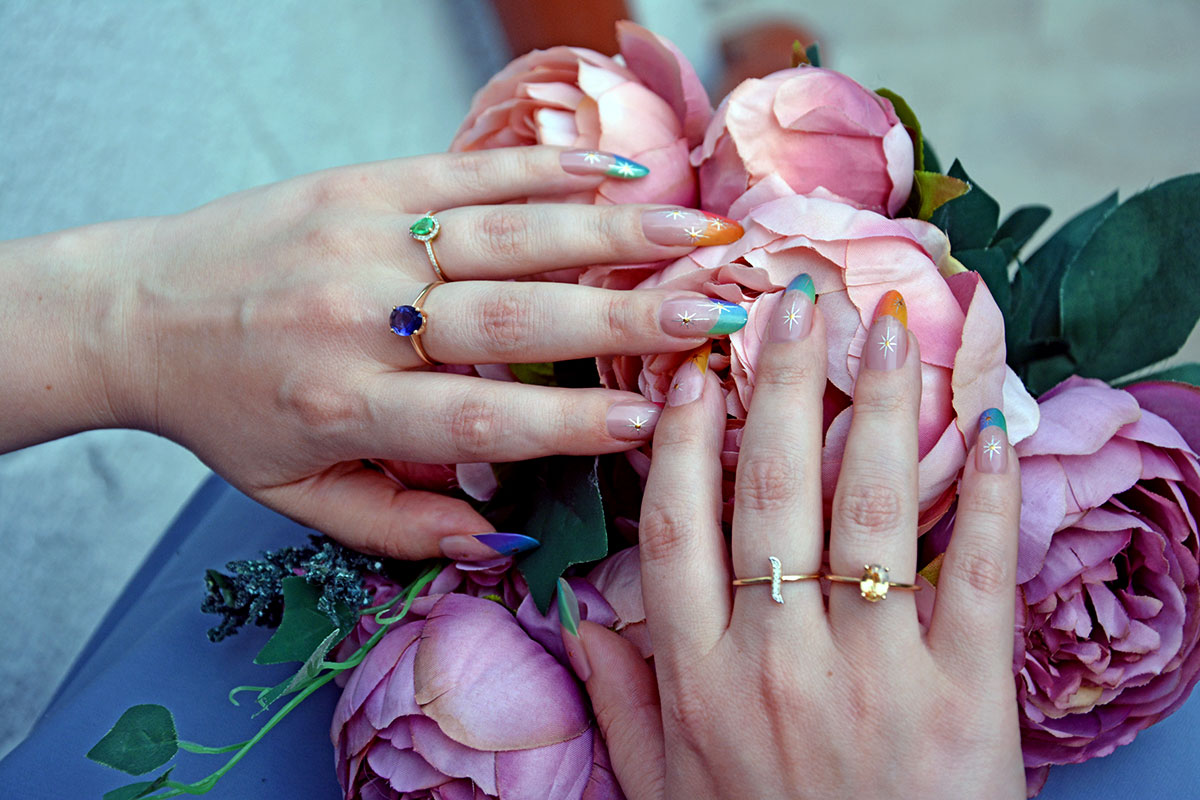
Some of your favourite jewellery pieces will be with chalcedony. Source: Trust me bro. Memes aside, I can’t remember anyone ever complaining about a deep dark onyx or an iridescent iris agate.
Do you have jewels with chalcedony? Did you know all of the chalcedony varieties? Tell me in the comments.





One Response
I do love a carnelian